
📊 Technical Details
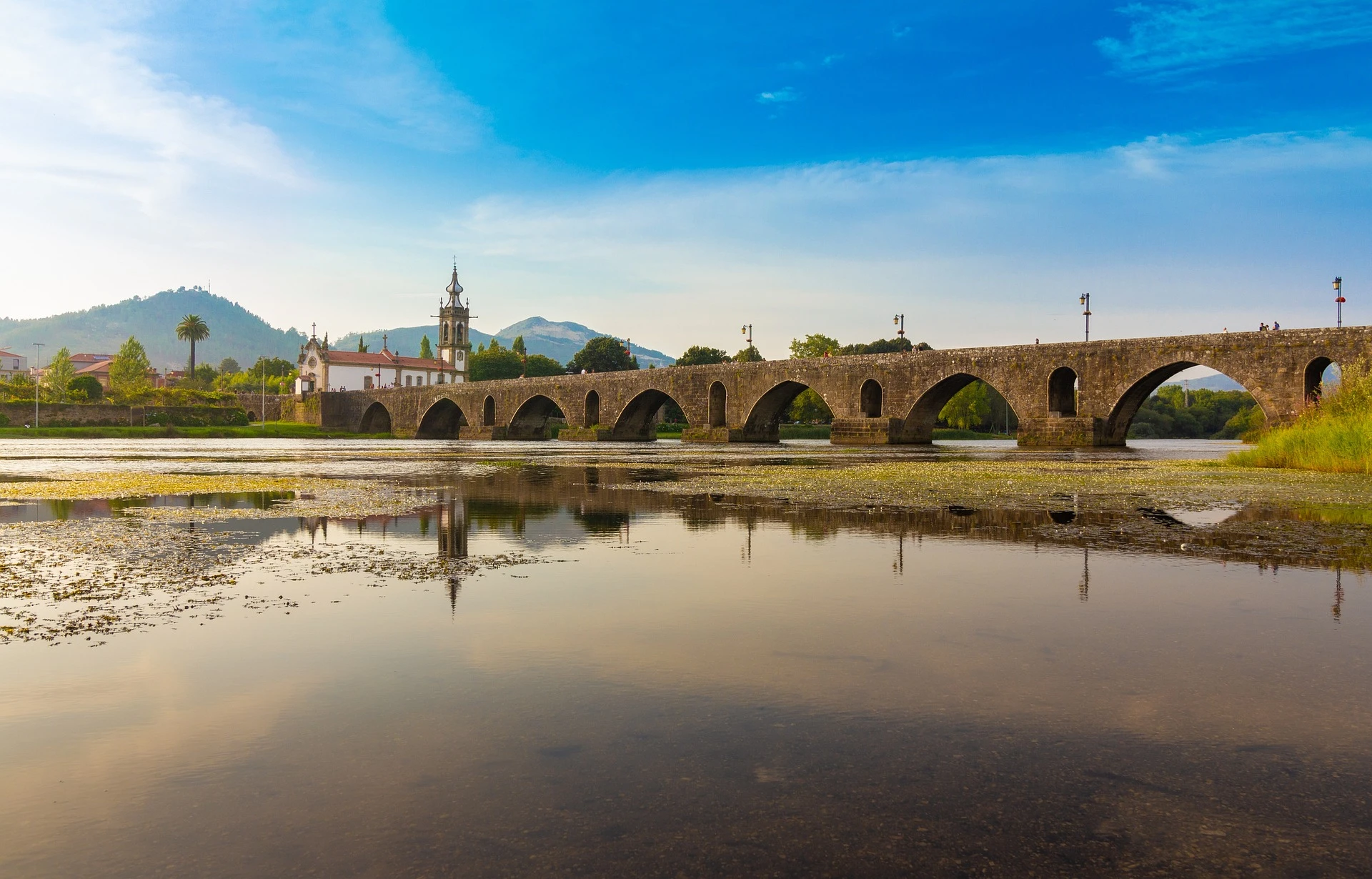
The flattest and most accessible of all major Camino routes. No significant climbs aside from Alto da Portela between Ponte de Lima and Rubiães (~300m over 4km). Predominantly paved: cobblestone through Portuguese towns, asphalt on approach roads. The Portuguese cobblestones (calçada portuguesa) are beautiful but notoriously slippery when wet and hard on the knees.
Exceptionally well-signed throughout both Portugal and Spain with yellow arrows and stone distance markers. One of the easiest Camino routes to navigate. The first 7km leaving Porto can be confusing in the city centre; a navigation app helps.
Mostly firm surfaces: Portuguese cobblestones, asphalt roads, and compacted earth tracks. The cobblestone sections are the main underfoot challenge — they look beautiful but become treacherous when wet and are hard on joints over long days. The Spanish section transitions to softer forest paths.
| T1 | Hiking: clear path, no exposure |
| T2 | Mountain Hiking: some uneven terrain |
| T3 | Difficult Mountain Hiking: exposed sections possible |
| T4 | Alpine Hiking: requires sure-footedness |
| T5 | Difficult Alpine Hiking: climbing experience needed |
| T6 | Very Difficult Alpine Hiking: advanced mountaineering |
| Info | Visit About > rating notes or SAC hiking difficulty ratings |
| A dream | Paved/hardpack (but you might reconsider after a 10-hour day) |
| Too easy | Firm dirt/gravel |
| Mind your step | Loose/uneven |
| A bit of a slog | Ongoing sapping surfaces |
| Make it stop! | A total energy sucker |
📅 Best Season
Walkable year-round with no serious winter hazards (no high mountain crossings). Summer is hot and very crowded, especially the final 100km from Tui. Spring and autumn are ideal. Winter walking is quiet and peaceful; most accommodation stays open. The Portuguese section in spring is particularly beautiful with lush green landscapes.
💭 Logistics & Budget
Portugal is cheaper than Spain: public albergues €8–10, private €12–18. Pilgrim menus in Portugal often cost €8–10. Once in Spain the costs align with the Francés. Overall one of the most affordable Camino routes. Baggage transfer widely available and popular on this route.
No permit required. A Pilgrim Credential is required for albergues and to receive the Compostela. Available from Porto Cathedral pilgrim office and at albergues along the route.
Porto Francisco Sá Carneiro Airport is one of Portugal’s busiest international airports, 15km from the city centre (Metro direct to city centre). Long-term parking not recommended; fly in or take train. Santiago de Compostela airport handles direct flights from major European cities.
Good albergue network from Porto, denser in Spain. Municipal albergues €8–12; private albergues €15–20. Hotels and guesthouses available throughout. The route from Tui to Santiago (last 115km) has plentiful accommodation. Cobblestone Portuguese sections can be hard on feet — book ahead in summer months in Galicia. Wild camping is illegal in Portugal outside designated sites and similarly prohibited in the Spanish section; the dense albergue network makes this a non-issue in practice.
🎶 Vibe
The Portuguese Camino has a warmer, more intimate character than the Francés. The Portuguese countryside is genuinely beautiful and the locals — accustomed to centuries of pilgrims — are exceptionally welcoming. The route passes through towns with real local life: morning markets, old women watching from doorways, fresh pastéis de nata at every café. The Spanish section from Tui picks up some of the Francés social energy as the two routes share the final approach to Santiago. A superb introduction to Camino culture for first-timers, and a favourite repeat route for pilgrims seeking something quieter than the Francés.
🛟 Safety & Inclusion
Extremely safe throughout. Porto and the cities are normal urban environments requiring standard city vigilance. The rural sections of Portugal are exceptionally safe. No significant hazards on this route.
🔗 Similar Trails
📍 Trails in the Same Region



Suggest a correction
Help keep Camino de Santiago (Portugués) accurate. Only the values you change are submitted, and every suggestion is reviewed before going live.