
📊 Technical Details
No technical terrain, but the GR 221 is consistently demanding for a trail with a maximum elevation of only 1,200m. The stone-paved paths — the famous dry stone (pedra en sec) workmanship that gives the route its name — are hard underfoot and very tiring on the feet over multiple days. The stage from Sóller through the Barranc de Biniaraix gorge (2,000+ stone steps) and up to Tossals Verds is the most demanding and spectacular. Some exposed clifftop sections in the northern stages require care in wet conditions. Overall accessible to fit recreational walkers.
Exceptionally well-waymarked throughout with the standard red-and-white GR blazes and excellent directional signage. One of the best-marked trails in Spain. A few short sections are not yet officially waymarked (noted in the Cicerone guidebook) but the paths remain easy to follow. Download the official GPX tracks from the Consell de Mallorca website as backup.
The dry stone paving is beautiful but brutally hard on feet over multiple days — good cushioned insoles are essential. Some sections traverse private finca land and can be fenced off unexpectedly if access agreements lapse. The popularity of the route means the best refuge stages book out months in advance. Summer heat (June–September) can be punishing on exposed sections with no shade.
| T1 | Hiking: clear path, no exposure |
| T2 | Mountain Hiking: some uneven terrain |
| T3 | Difficult Mountain Hiking: exposed sections possible |
| T4 | Alpine Hiking: requires sure-footedness |
| T5 | Difficult Alpine Hiking: climbing experience needed |
| T6 | Very Difficult Alpine Hiking: advanced mountaineering |
| Info | Visit About > rating notes or SAC hiking difficulty ratings |
| A dream | Paved/hardpack (but you might reconsider after a 10-hour day) |
| Too easy | Firm dirt/gravel |
| Mind your step | Loose/uneven |
| A bit of a slog | Ongoing sapping surfaces |
| Make it stop! | A total energy sucker |
📅 Best Season
Best March–June and September–November. Spring (April–May) is the classic window: wildflowers everywhere, reasonable temperatures, and the landscape at its most vivid. Autumn (September–October) is also excellent. Summer (July–August) is possible but very hot on exposed sections and the refuges are absolutely packed — book months ahead. Winter walking is pleasant on lower sections but the highest stages can have ice and rain. The Serra de Tramuntana is significantly cooler and wetter than the rest of Mallorca.
💭 Logistics & Budget
Dirtbag assumes refuge dorm stays (~€15–20/night) and self-catered or packed lunches, with evening meals at refuges (~€12–15). Average assumes refuge demi-pension or village guesthouse (€50–80pp) plus restaurant dinners in villages like Valldemossa, Deià, and Sóller. Flashpacker adds boutique hotel nights — Deià in particular has some exceptional (and expensive) properties. Sóller market on Saturday is a highlight and good for resupply. Mallorca is a tourist island so restaurant prices in the villages can be significantly higher than mainland Spain.
No permit required to hike the GR 221. Refuge booking is mandatory for overnight stays. Book well in advance through the official Consell de Mallorca website. Some sections cross private land on which access is permitted by agreement.
Port d’Andratx: bus 102 from Palma (50min). Port de Pollença: bus 340 from Palma (1hr 15min). Palma Airport (PMI) has extensive European connections year-round. The island’s public bus network (TIB) serves most trail villages; taxis fill gaps. Palma is an excellent pre/post-trail base with outstanding food, culture and accommodation at all price points.
The GR 221 has a dedicated network of mountain refuges (refugis) managed by the Consell de Mallorca — Ses Fontanelles, Coma d’en Vidal, Muleta, Tossals Verds, Son Amer, and others. These refuges are excellent value (around €15–20 for a dorm bed; demi-pension available at most) and are a core part of the experience. Advance booking is essential — the refuges fill completely during peak season (April–June and September–October) and must be reserved at caminsdepedra.conselldemallorca.es. Several stages also pass through or near charming mountain villages (Valldemossa, Deià, Sóller, Lluc) with hotels and guesthouses for those preferring more comfort. Baggage transfer services are widely available from operators in Palma. Wild camping is not permitted in the Serra de Tramuntana.
🎶 Vibe
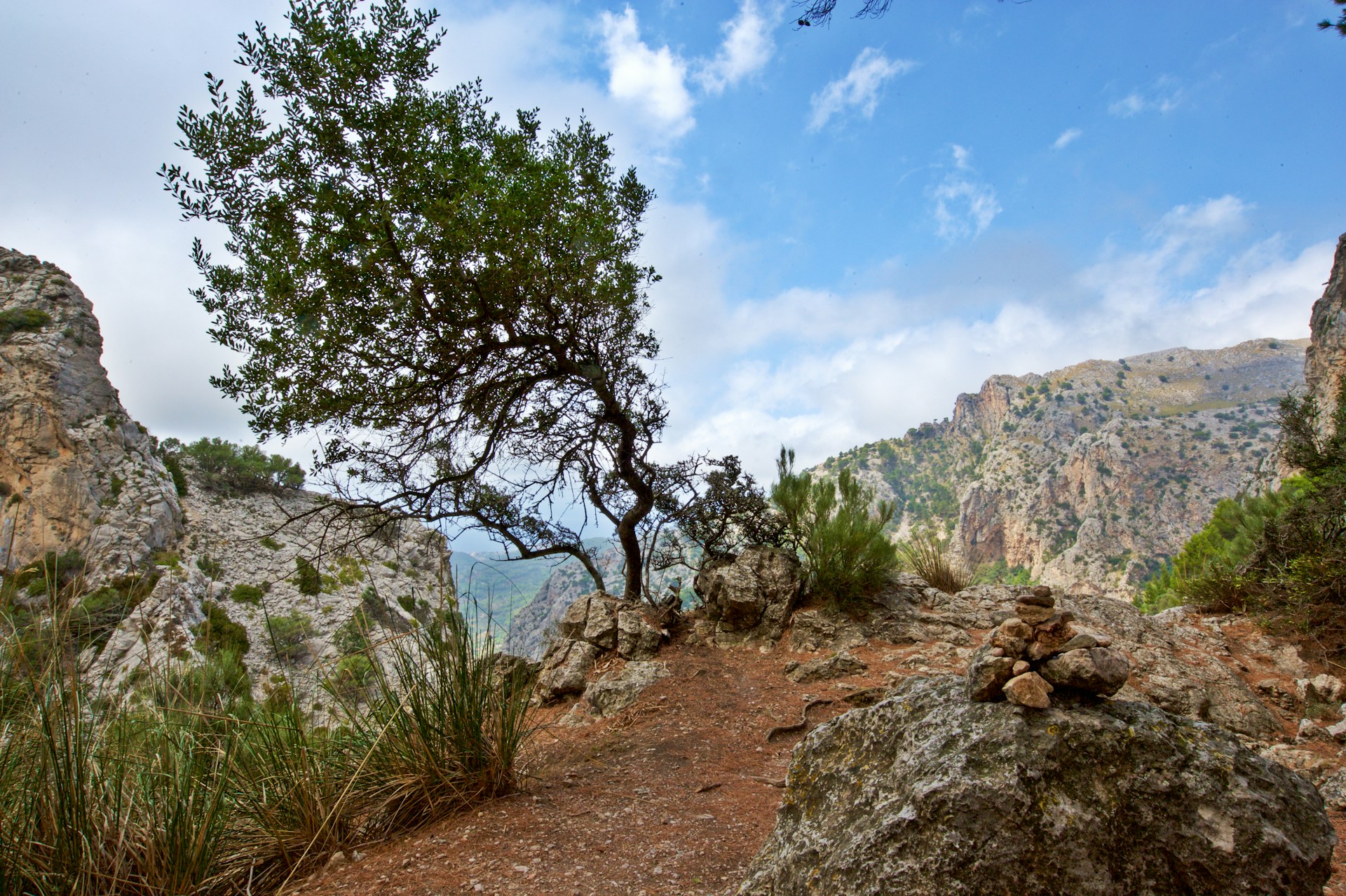
The GR 221 is one of the great surprises of Mediterranean hiking. Most people associate Mallorca with package tourism, and the discovery that the island contains a UNESCO World Heritage mountain range with some of the finest stone-paved mountain paths in Europe comes as a revelation. The Serra de Tramuntana is genuinely dramatic: limestone peaks, ancient olive trees twisted by centuries of wind, terraced hillsides built by the Moors a thousand years ago, and views of an impossibly blue sea at the end of every ridge. The villages on the route — Valldemossa (Chopin and George Sand spent a winter here), Deià (Robert Graves’ home), Sóller (the orange-grove capital) — are among the most beautiful in Spain. The refuge network gives the trail a social heartiness that is entirely un-Spanish and reminds experienced walkers of the Alps. Walking the GR 221 off-season, when the villages belong to their residents again, is one of the most enjoyable week-long walks in Europe.
🛟 Safety & Inclusion
Relatively safe trail with good infrastructure. Main hazards are heat and dehydration in summer, slippery wet stone paths after rain, and exposed clifftop sections in the northern stages. Water sources are signposted but variable. It is advised to carry at least 2 litres between refuges. Some stages in the north have minimal shade. Emergency services on Mallorca are excellent.
📍 Trails in the Same Region


Suggest a correction
Help keep GR 221 (Dry Stone Route) accurate. Only the values you change are submitted, and every suggestion is reviewed before going live.