
📊 Technical Details
Rolling hills, river valleys and open farmland with no technical difficulty. The climb out of Le Puy and the Aubrac crossing are the most demanding sections. A gentle long-distance walk suitable for any reasonably fit person.
One of the best-marked long-distance routes in Europe. Red and white GR blazes throughout, supplemented by yellow Camino shell and arrow markers. Navigation is essentially effortless.
Good mix of paths, tracks and quiet country lanes. Some sections cross agricultural land that becomes muddy after rain, and the Aubrac plateau can be wet. A small amount of tarmac road walking in village approaches.
| T1 | Hiking: clear path, no exposure |
| T2 | Mountain Hiking: some uneven terrain |
| T3 | Difficult Mountain Hiking: exposed sections possible |
| T4 | Alpine Hiking: requires sure-footedness |
| T5 | Difficult Alpine Hiking: climbing experience needed |
| T6 | Very Difficult Alpine Hiking: advanced mountaineering |
| Info | Visit About > rating notes or SAC hiking difficulty ratings |
| A dream | Paved/hardpack (but you might reconsider after a 10-hour day) |
| Too easy | Firm dirt/gravel |
| Mind your step | Loose/uneven |
| A bit of a slog | Ongoing sapping surfaces |
| Make it stop! | A total energy sucker |
📅 Best Season
Spring and early autumn offer the best conditions: mild temperatures, wildflowers and manageable pilgrim numbers. July and August are very hot in the Gers and Lot-et-Garonne flatlands and gîtes fill early. The route is walkable year-round but winter days are short.
💭 Logistics & Budget
The pilgrim gîte network keeps costs lower than most French long-distance routes. Chambres d’hôtes and small hotels add comfort for a modest extra. Shared evening meals at gîtes are a highlight and good value.
Le Puy-en-Velay is reached by bus from Clermont-Ferrand (around 1.5 hours), which has TGV connections to Paris and Lyon. Saint-Jean-Pied-de-Port has a direct train from Bayonne (around 1 hour), a major rail hub on the Bordeaux-Irun line. Le Puy has limited parking and is best approached by train and bus.
A dense network of gîtes d’étape (pilgrim hostels) lines every stage, offering dormitory beds, evening meals and breakfast. Chambres d’hôtes, small hotels and municipal campsites supplement the gîtes. Baggage transfer is available throughout via specialist operators. Wild camping is not a legal right on private land in France but discreet bivouac is practised by some pilgrims.
🎶 Vibe
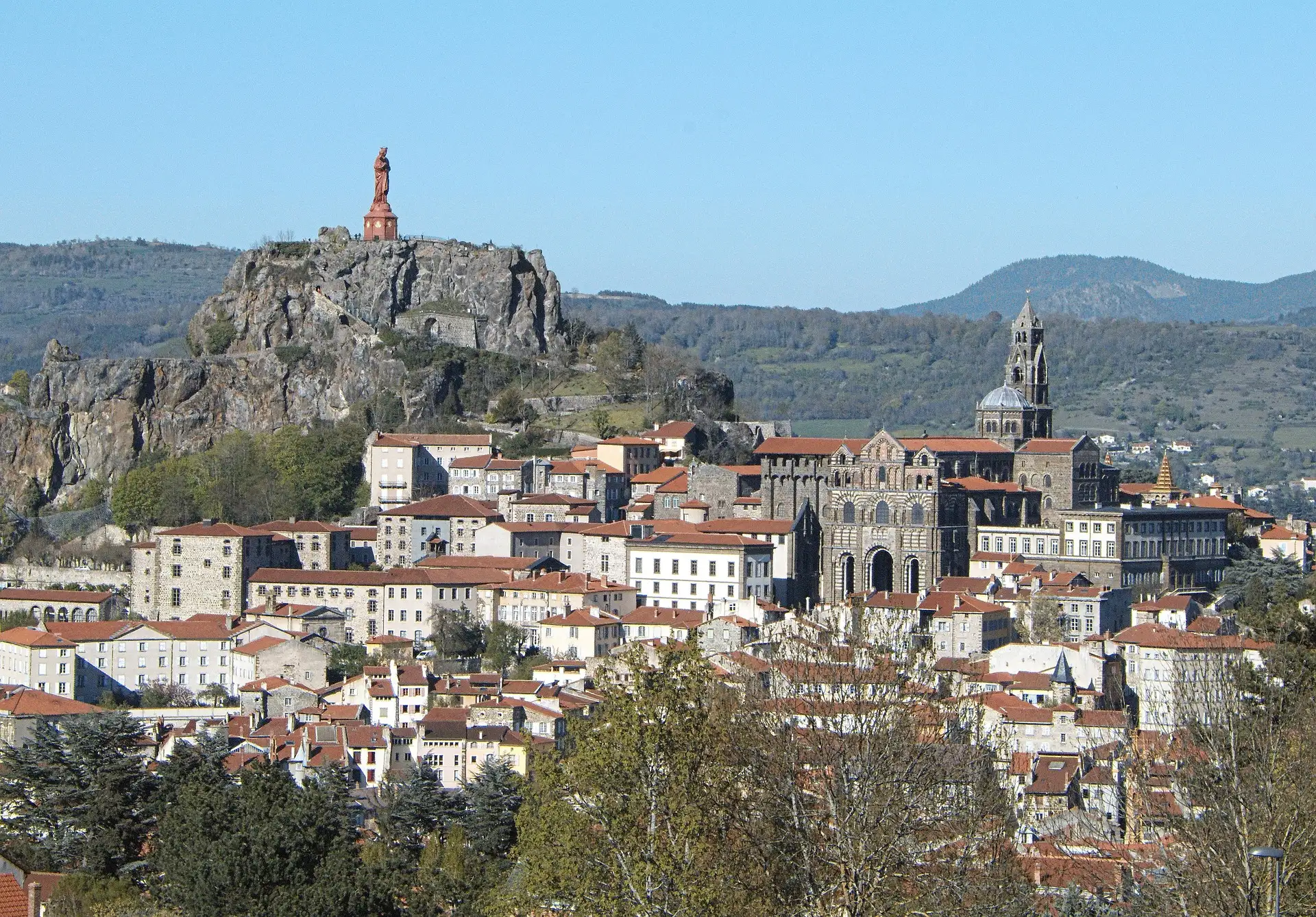
France’s most walked pilgrimage route, following the GR 65 from Le Puy-en-Velay’s volcanic cathedral through some of the most quietly beautiful landscapes in the country. The trail crosses the Massif Central, the wide Aubrac plateau, the gorges of the Lot, the bastide towns of Gascony and the Basque foothills before arriving at Saint-Jean-Pied-de-Port, gateway to the Spanish Camino Francés. As much a cultural and culinary journey as a physical one, with shared dinners, church stamps and the pilgrim community defining the experience.
🛟 Safety & Inclusion
Very low crime on the pilgrim route. Solo pilgrims, including women, walk it routinely without incident. The main hazards are heat exhaustion in the Gers lowlands in summer and fatigue from consecutive long days.
📍 Trails in the Same Region


Suggest a correction
Help keep Via Podiensis accurate. Only the values you change are submitted, and every suggestion is reviewed before going live.